
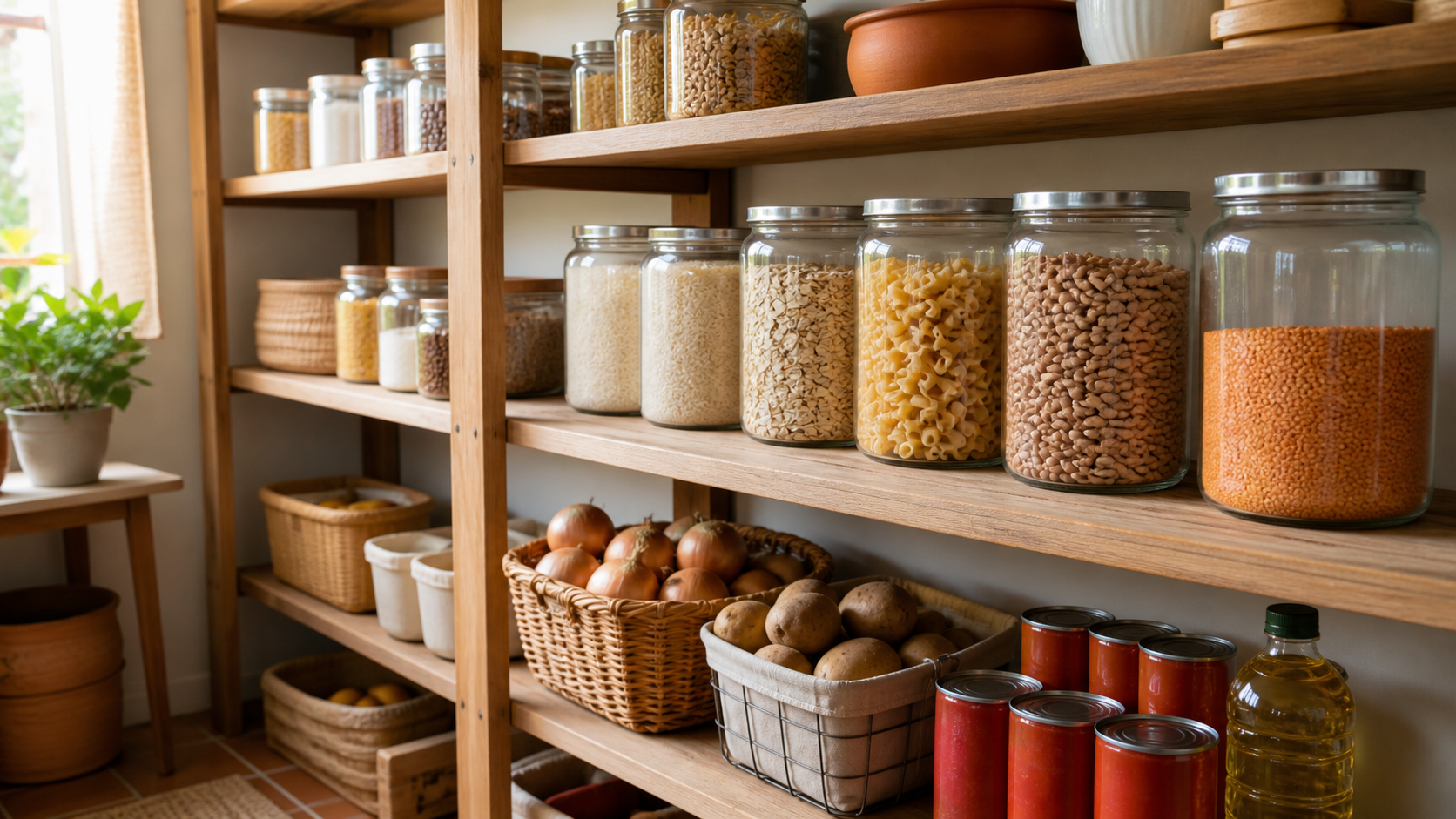
A budget-friendly pantry is not a room filled with bulk purchases. It is a small, organized collection of ingredients that you use regularly and can combine in several ways. The goal is to support everyday cooking while avoiding duplicate products, expired packages, and emergency shopping trips.
Define the meals you actually cook
List ten familiar meals your household enjoys. Look for repeating ingredients: rice, pasta, beans, tomatoes, oats, flour, spices, or canned fish. These recurring items deserve pantry space because they connect directly to meals you already know how to prepare.
Build around flexible staples
Choose one or two grains, a few proteins with a useful shelf life, and ingredients that create flavor. A practical foundation might include rice, pasta, oats, dried or canned beans, canned tomatoes, cooking oil, vinegar, stock ingredients, and a modest spice collection. The exact list should reflect culture, dietary needs, and local prices.
Keep affordable proteins available
Beans, lentils, eggs, canned fish, and nut or seed products can make simple meals more substantial. Buy only options the household will eat. A discounted ingredient is not economical when it remains unused.
Create a small flavor shelf
Salt, pepper, garlic, onions, dried herbs, spices, soy sauce, mustard, vinegar, and tomato products can transform basic ingredients. Start with the flavors used in your regular recipes rather than purchasing large spice sets. Whole containers lose quality when stored for years.
Use the first-in, first-out method
Place newly purchased items behind older ones. Keep labels visible and group similar products together. Once a month, move items approaching their best-quality date into a clearly marked “use soon” area and include them in the next meal plan.
Avoid false bulk savings
Compare the unit price, but also consider storage space and realistic use. A larger package can be economical for a staple consumed every week. It can be wasteful for an ingredient used once every few months. Bulk buying is most effective when demand is predictable.
Connect pantry and freezer
The pantry becomes more useful when paired with a few frozen vegetables, portions of cooked beans, bread, or homemade stock. Label freezer items and keep a visible inventory so food does not disappear behind newer purchases.
Keep three emergency meal combinations
- Pasta, canned tomatoes, beans, and dried herbs.
- Rice, frozen vegetables, eggs, and a savory sauce.
- Oats, shelf-stable milk or an alternative, fruit, and seeds.
These are frameworks rather than fixed recipes. They can be adjusted to available ingredients while still producing a complete meal.
Make inventory visible
Clear containers are optional; readable labels and consistent locations are more important. Store heavy items low, keep frequently used staples within easy reach, and avoid stacking so deeply that products are forgotten. A simple handwritten inventory can work better than an elaborate system nobody maintains.
Restock with intention
Add an item to the shopping list when opening the final package, not merely when noticing a sale. Review the pantry before shopping and buy enough for the next planning period. This approach keeps cash available, reduces clutter, and ensures the pantry remains a working tool rather than a collection.
Leave a Reply