
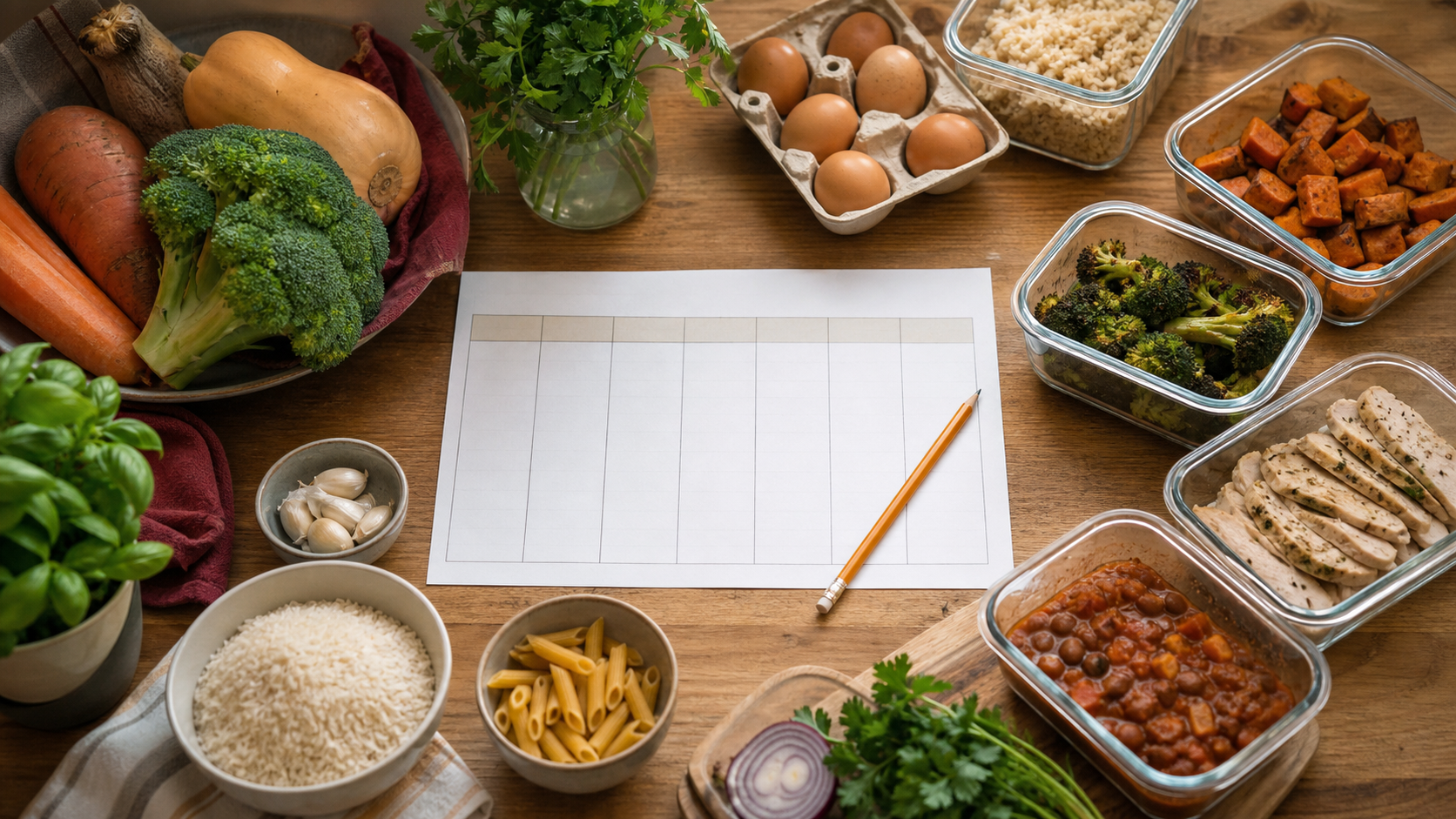
A useful meal plan should reduce decisions, not create another complicated project. The most practical plans begin with the food already at home, account for the week’s busiest evenings, and reuse ingredients without making every meal feel identical.
Start with the calendar
Before choosing recipes, identify late workdays, school activities, appointments, and evenings when nobody wants to cook. Assign the simplest meals to the busiest days. Save recipes that require more chopping or oven time for evenings with a wider margin.
Check the kitchen first
Look through the refrigerator, freezer, and pantry. Note produce that needs to be used soon, opened packages, and proteins already available. Building two or three meals around these ingredients reduces waste and keeps the shopping list shorter.
Use a flexible seven-day structure
- Day 1: A tray-bake or one-pot meal with vegetables and a protein.
- Day 2: Grain bowls or wraps using leftovers from Day 1.
- Day 3: Pasta, noodles, or rice with a quick sauce and vegetables.
- Day 4: A soup, stew, or curry that can be prepared ahead.
- Day 5: A freezer meal or simple breakfast-for-dinner option.
- Day 6: A family favorite that benefits from extra preparation time.
- Day 7: A planned leftovers night to clear small portions safely.
Choose overlapping ingredients
Overlap is useful when it is intentional. A bunch of carrots can appear roasted in one meal, grated into a salad, and simmered into soup. Cooked rice can accompany a main dish and later become fried rice. The aim is to use the same purchase in different formats rather than repeat the same plate.
Plan components, not only recipes
Preparing a few versatile components can be more helpful than cooking complete meals in advance. Wash sturdy vegetables, cook a grain, mix a simple dressing, and portion one protein. These elements can become salads, bowls, wraps, or side dishes throughout the week.
Write a shopping list by section
Group the list into produce, proteins, dairy or alternatives, pantry, and frozen items. Check quantities before leaving home. A focused list reduces forgotten essentials and discourages purchases that do not fit the plan.
Include a backup meal
Every plan needs one meal requiring almost no effort. Examples include eggs with toast and vegetables, pasta with a pantry sauce, or a frozen homemade soup. A backup meal prevents an unexpectedly busy day from turning into an expensive last-minute decision.
Store food safely
Cool cooked food promptly, use clean containers, label leftovers, and follow current food-safety guidance for storage times and reheating. When the safety of a leftover is uncertain, do not rely only on smell or appearance.
Review before repeating
At the end of the week, note which meals were easy, which produced too many leftovers, and which ingredients were wasted. Keep the successful framework and adjust only the parts that caused friction. A good meal plan becomes simpler with use because it reflects the household’s real habits.
Leave a Reply